




Publications
REBUILDING LIVES: Disaster Response and Recovery for Older Adults and People with Disabilities in California
November 2025Executive Summary
Disasters disproportionately affect older adults and people with disabilities. The Los Angeles area wildfires in January of 2025 claimed the lives of at least 31 residents, 26 of whom were either over the age of 65 or had a disability. Even with such figures becoming the norm, local agencies are not integrating their most vulnerable residents into emergency planning.
Many individuals, especially older adults, have not prepared for disasters with a plan or the necessary evacuation resources. Those fortunate to evacuate face additional challenges. Evacuation centers during the Eaton fires lacked data on residents with access and functional needs, leading to shortages of accessible equipment and critical medical supplies. Medical staff were overwhelmed, and many lacked experience and training in the specialized needs of older adults and people with disabilities.
Recovery is often longer and more arduous for older adults. Those who have lost homes face barriers to rebuilding and rehousing in a strained market beyond their means. Navigating insurance is complicated and compounded by a lack of legal resources. Additionally, growing evidence shows unscrupulous and illegal business tactics are perpetrated on older adults who have lost their homes.
Older adults may experience lasting instability after a traumatic disaster. The loss of a long-term facility drastically alters a resident’s continuity of care, while behavioral health issues persist long into the recovery process and compound existing behavioral health needs. Previous fires, like the 2018 Camp Fire in Paradise, show that widespread displacement of older adults can persist and reshape entire communities.
State and local agencies must prepare for more frequent and intense natural disasters by focusing on their most vulnerable residents. Local groups are crucial to fostering resiliency in the populations they serve. They are integral to providing recovery services while strengthening communities through member-driven collaboration.
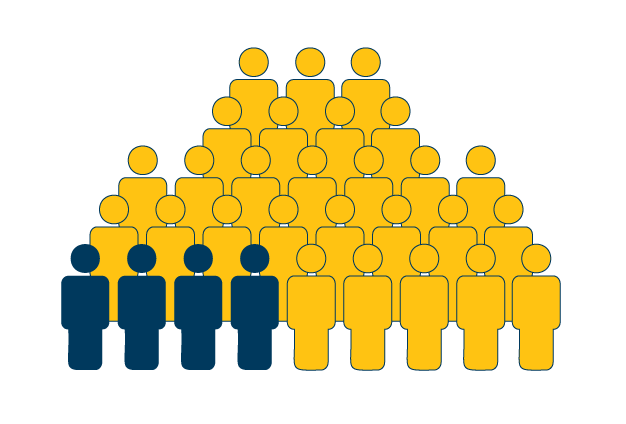
Of the 31 identified victims of the Eaton and Palisades fires, all but four were either over age 65 or had a disability. The median age of the victims was 76.*
*Data compiled by CCoA using a public database from the Los Angeles County Medical Examiner’s Office.
HOUSING THOSE HARDEST HIT: Addressing Older Adult Homelessness
September 2024Executive Summary
Solving the housing crisis has become a key objective for state policymakers. With a shortage of available units, the cost of housing has risen dramatically in recent years and older adults are the most profoundly impacted.
THE OLDER ADULT HOUSING CRISIS
From 2017 to 2022, the number of adults aged 55-64 who accessed homelessness services increased by over 90% while the number of adults over 65 increased by over 166% – far outpacing any other age group. In 1990, 11% of the homeless population was over the age of 50 while older adults represented nearly half the homeless population in 2023. Among the population of homeless older adults, 41% first experienced homelessness after the age of 50. Experiencing homelessness at a later stage in life correlates with increased cognitive impairment and decreased overall health. Mortality rates jump proportionately to the age that an older adult first experiences homelessness.
CONTINUUM OF CARE AMONG OLDER ADULTS
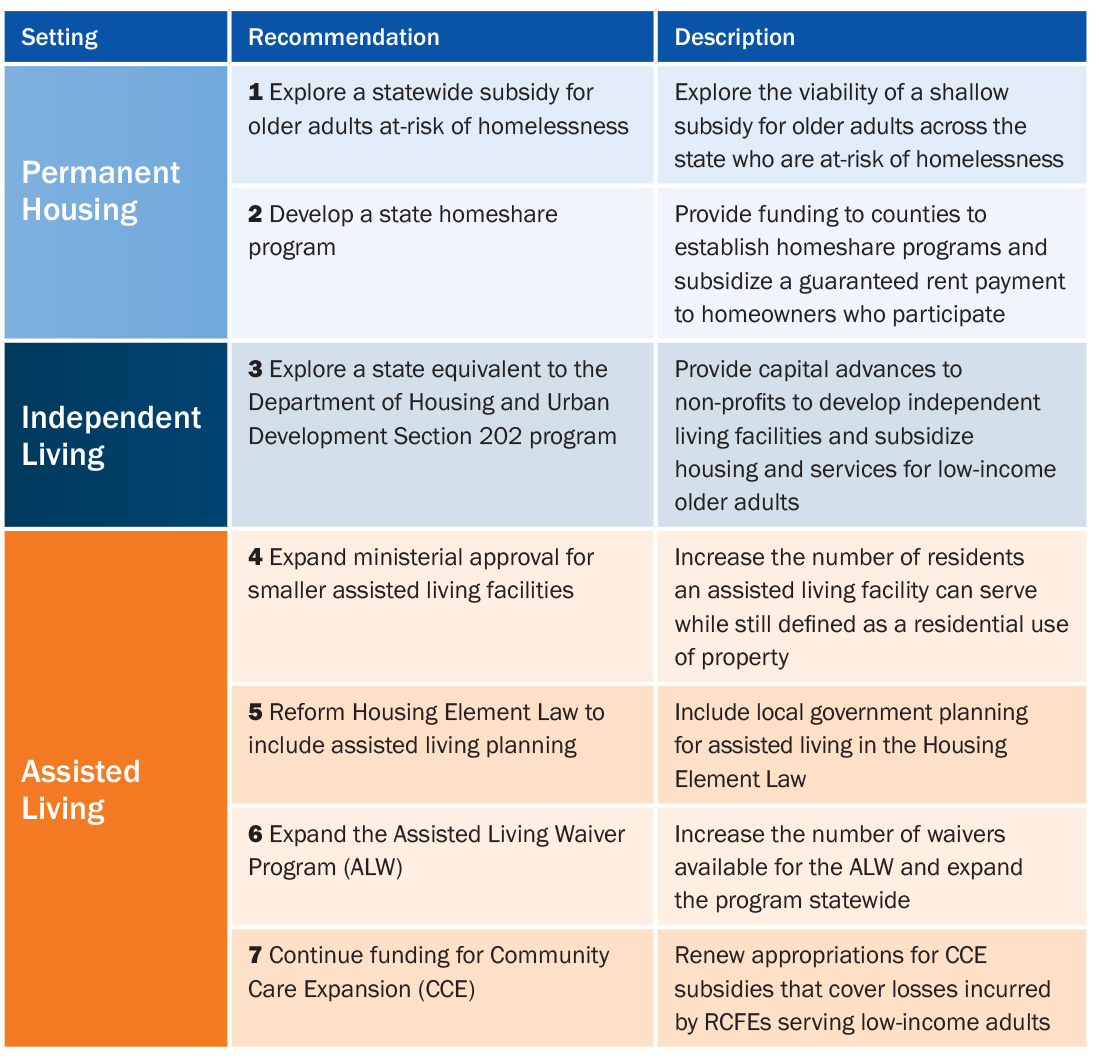
Housing for older adults adds the complexities of essential care and services to the complicated issue of housing. While paths to permanent, affordable housing are the goal, additional care considerations are necessary to ensure the health and well-being of the individual. Policymakers must consider the continuum of care sequence of settings, each with a unique range of services. A shortage of one setting in the continuum will ultimately create strain in other settings. This report discusses three primary settings across the continuum of care: permanent housing, independent living, and assisted living.
RECOMMENDATIONS
The table lists the Commission’s seven recommendations to mitigate older adult homelessness based on the three primary settings within the continuum of care.